Chumps Lab Studio
An editor that edits with you.
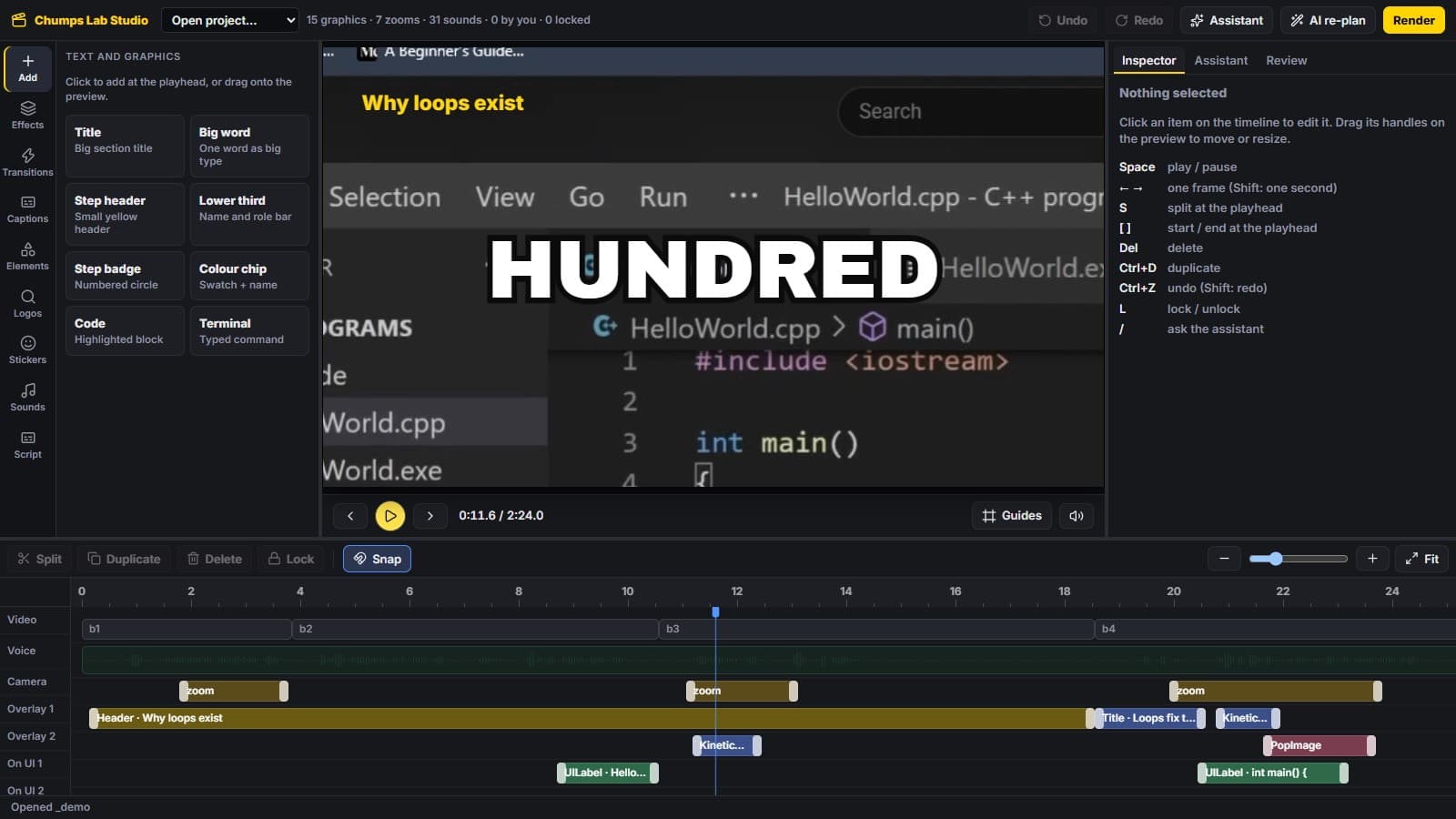
An AI video editor for screen-recording tutorials. It turns a raw recording into an edited video, then hands you a real editor and an assistant to change any of it.
The problem
A screen-recording tutorial is mostly repetition. The interesting part is the explanation; the rest is housekeeping: trim the dead air, push in on the click, label the menu, caption the sentence, add a transition. Doing it by hand takes hours and is easy to get wrong.
The first generation of AI editors responded by taking over. You upload the footage, wait, and get a finished video you did not ask for. If a cut is wrong, you cannot see why, and you cannot fix the part you disagree with. That is not editing. It is a slot machine.
The decision
I made the AI write a document instead of a video. The Edit Decision Document is a typed plan: clips, trims, zooms, labels, captions, sound effects and graphic elements, each with a time range and a reason. The renderer turns the document into video with Remotion.
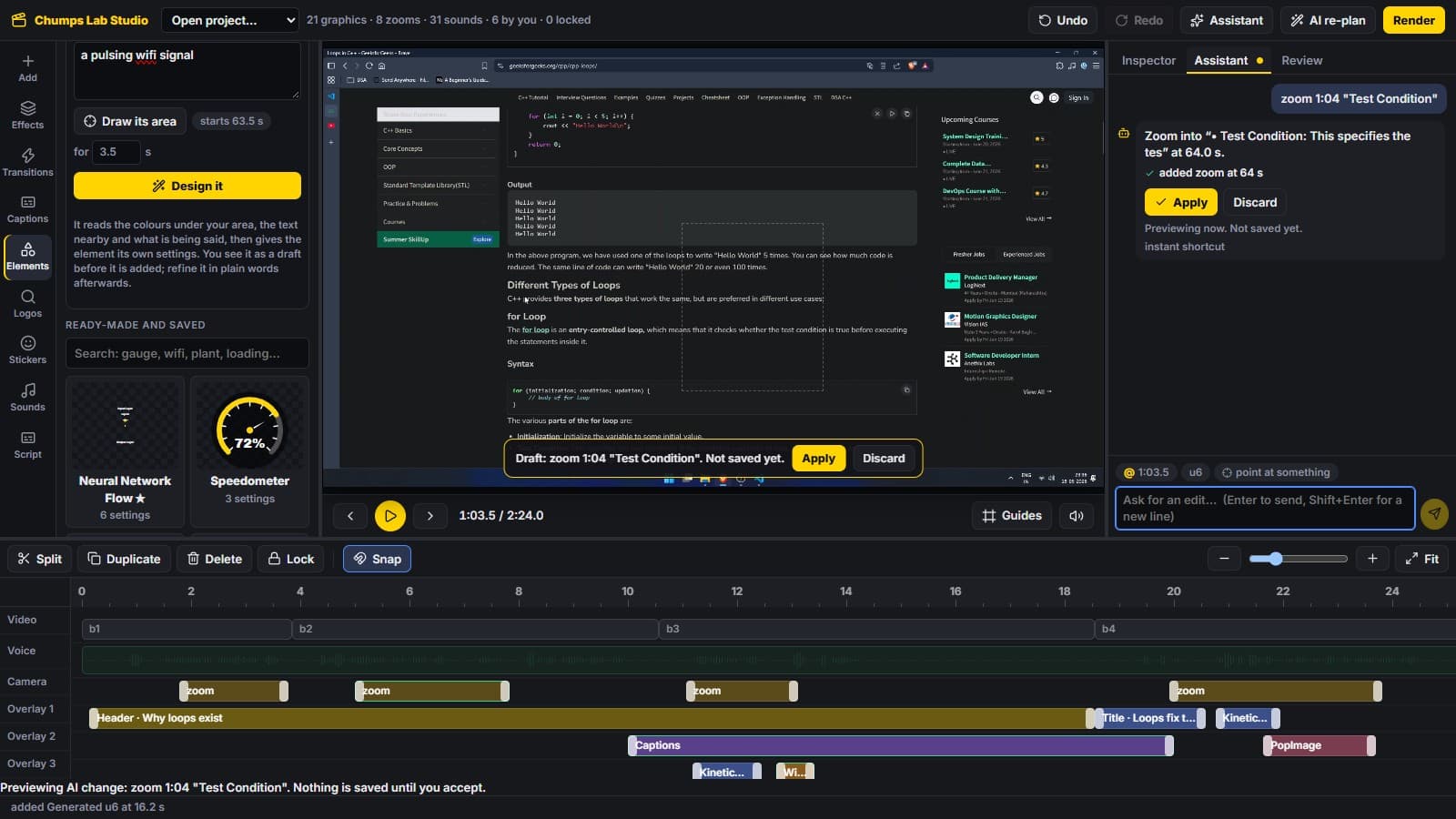
Because the document is typed, the editor can validate it, diff it and apply it. Every AI change arrives as a draft. You can accept a zoom and reject the caption. Edits you lock survive the next planning pass.
The AI should propose an edit, not perform one. A typed document makes that difference visible.
The build
The editor is a React application with a Remotion timeline renderer. The assistant runs locally and produces the EDD. A Python service handles the heavier media analysis. The render path targets −14 LUFS, so the output is ready for the platforms people actually publish to.
Animated graphic elements are generated from a safe spec rather than arbitrary code. That keeps the assistant inside a small, reviewable vocabulary and keeps the render deterministic.
- Typed Edit Decision Document as the contract between AI and editor
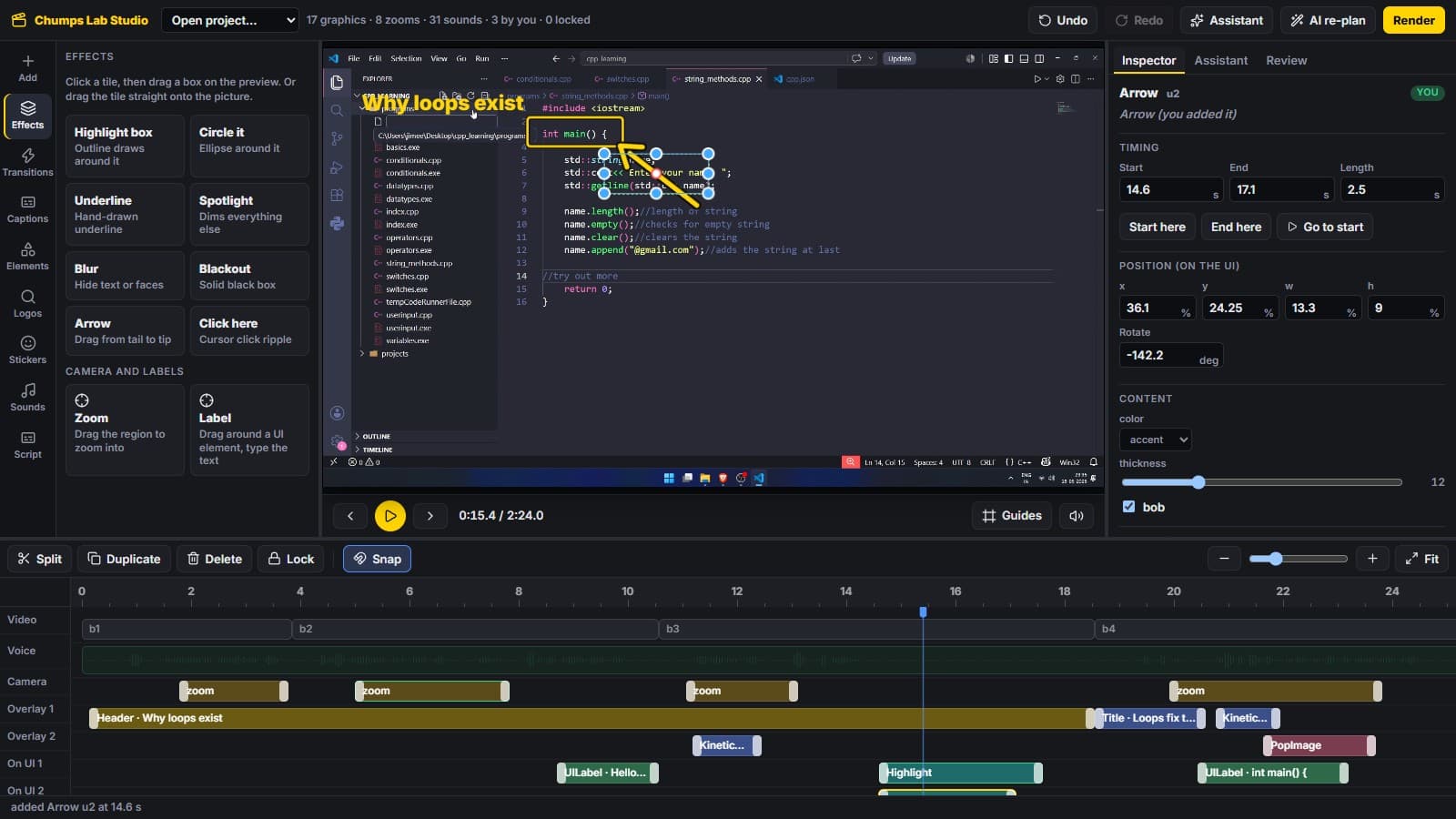
- Remotion renderer with a real timeline and preview
- Local assistant that proposes edits as drafts
- Locked edits survive re-planning
- 26 of 26 browser end-to-end checks passing
The evidence
The project has 26 passing browser end-to-end checks. The typed command layer, the draft/apply flow and the render pipeline are all exercised. The editor is usable today; the assistant is still being widened to more tutorial patterns.
It is deliberately marked in progress. The hard part is not making a demo that edits one recording. It is making a system that stays predictable when the recording changes.
What I learned
The most useful thing I built is not the model integration. It is the document schema. Once the AI had a typed surface to write to, every other part of the system became easier: validation, undo, diffing, tests and the UI.
That is the same lesson as H.A.L.O, in a different medium. Put the intelligence behind a contract you can inspect.